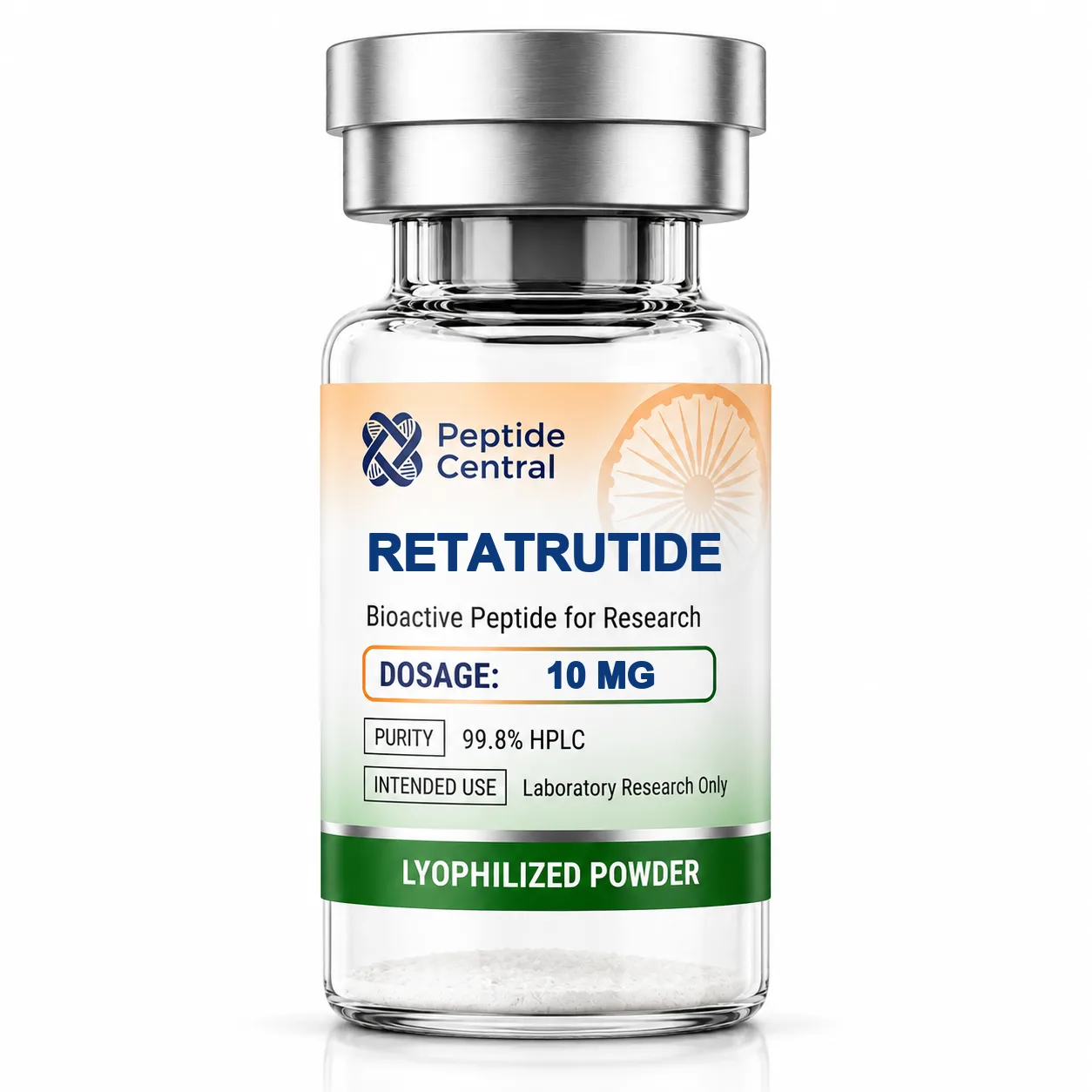
What is Retatrutide?
Retatrutide is a novel triple receptor agonist targeting GIP, GLP-1, and glucagon receptors simultaneously. Developed by Eli Lilly, phase 2 clinical trials demonstrated 17–24% body weight reduction over 48 weeks — the highest efficacy data ever published for a weight-loss compound. Its triple-agonist mechanism provides synergistic metabolic effects beyond dual agonists like semaglutide or tirzepatide.
Research Benefits
- Triple agonism (GIP/GLP-1/glucagon) delivers superior fat mobilization compared to dual agonists
- Phase 2 trials recorded 17–24% total body weight reduction over 48 weeks
- Suppresses appetite and reduces caloric intake through hypothalamic GLP-1 signaling
- Glucagon component enhances hepatic fat oxidation and energy expenditure
- Improves insulin sensitivity, fasting glucose, and lipid panels in metabolic research
- Favorable tolerability profile in clinical studies with dose-titration protocols
Dosage & Protocol
Research protocols begin at 2 mg/week subcutaneously, escalating by 2 mg every 4 weeks to a maximum of 12 mg/week. The long half-life of approximately 6 days allows once-weekly dosing. Dose titration is critical to minimize gastrointestinal side effects during the loading phase.
Frequently Asked Questions
Retatrutide's triple-receptor mechanism (GIP + GLP-1 + glucagon) produced 17–24% weight loss in phase 2 trials, significantly outperforming semaglutide's ~15% at maximum doses, primarily due to the added glucagon receptor activity boosting energy expenditure.
Retatrutide has a half-life of approximately 6 days, enabling once-weekly subcutaneous injection. This extended half-life allows stable plasma levels with minimal peak-to-trough fluctuations.
The most commonly reported effects in clinical research are nausea, vomiting, and constipation, predominantly during dose escalation. These effects are generally transient and managed with slow titration protocols.