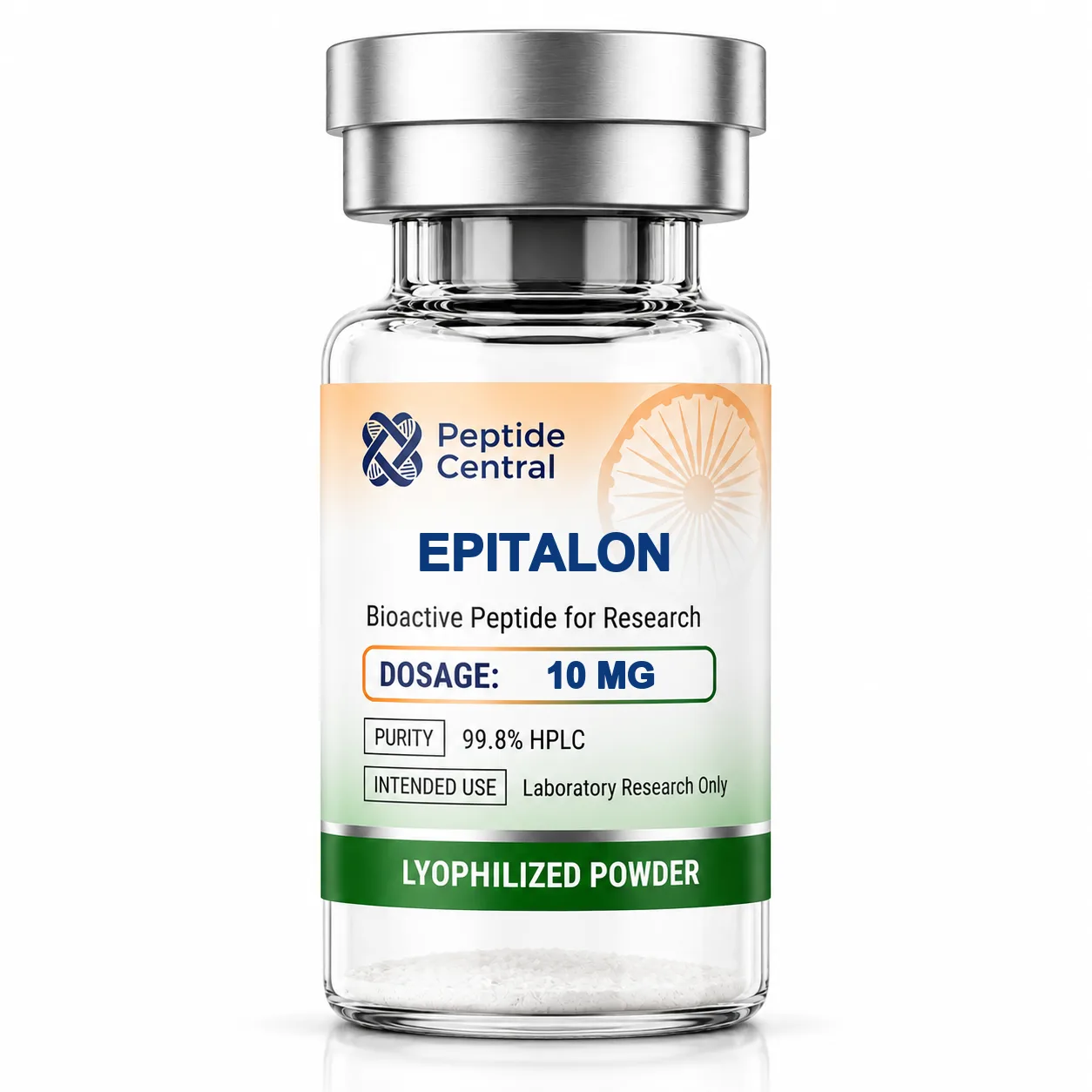
What is Epitalon?
Epitalon (Epithalon) is a synthetic tetrapeptide (Ala-Glu-Asp-Gly) developed by Professor Vladimir Khavinson at the St. Petersburg Institute of Bioregulation and Gerontology. It is the synthetic analog of Epithalamin, a natural polypeptide extracted from the pineal gland. Epitalon is best known for its ability to activate telomerase — the enzyme that rebuilds telomeres — potentially extending cellular lifespan. It also restores melatonin production and regulates the hypothalamic-pituitary axis.
Research Benefits
- Activates telomerase, lengthening telomeres and potentially extending cellular replicative lifespan
- Restores melatonin production and circadian rhythm regulation via pineal gland support
- Antioxidant activity — reduces oxidative stress markers and lipid peroxidation
- Studied for cancer prevention through regulation of oncogene expression
- Improves immune function in aging models by restoring T-cell and NK-cell activity
- Regulates the hypothalamic-pituitary-gonadal axis — relevant for hormonal aging research
Dosage & Protocol
Research protocols use 5–10 mg per day via subcutaneous injection. Standard Khavinson Institute protocols run 10–20 consecutive days, repeated 2–3 times per year. The short half-life (~30 minutes) means daily dosing is required during the cycle. Evening administration is preferred to align with pineal gland activity.
Frequently Asked Questions
Epitalon interacts with chromatin in cells to increase the expression of telomerase reverse transcriptase (TERT) — the catalytic subunit of telomerase. This upregulation allows cells to extend their telomeres, potentially increasing the number of replication cycles before cellular senescence.
Epitalon (tetrapeptide) primarily targets telomerase activation and melatonin restoration through pineal gland stimulation. Pinealon (tripeptide) protects pinealocytes and supports the melatonin biosynthesis pathway more directly. Together they provide complementary coverage of pineal and longevity pathways.
Based on Khavinson Institute research, Epitalon cycles of 10–20 days are typically run 2–3 times per year, with 3–4 month intervals between cycles. This cyclic protocol maintains telomerase activation benefits without continuous administration.