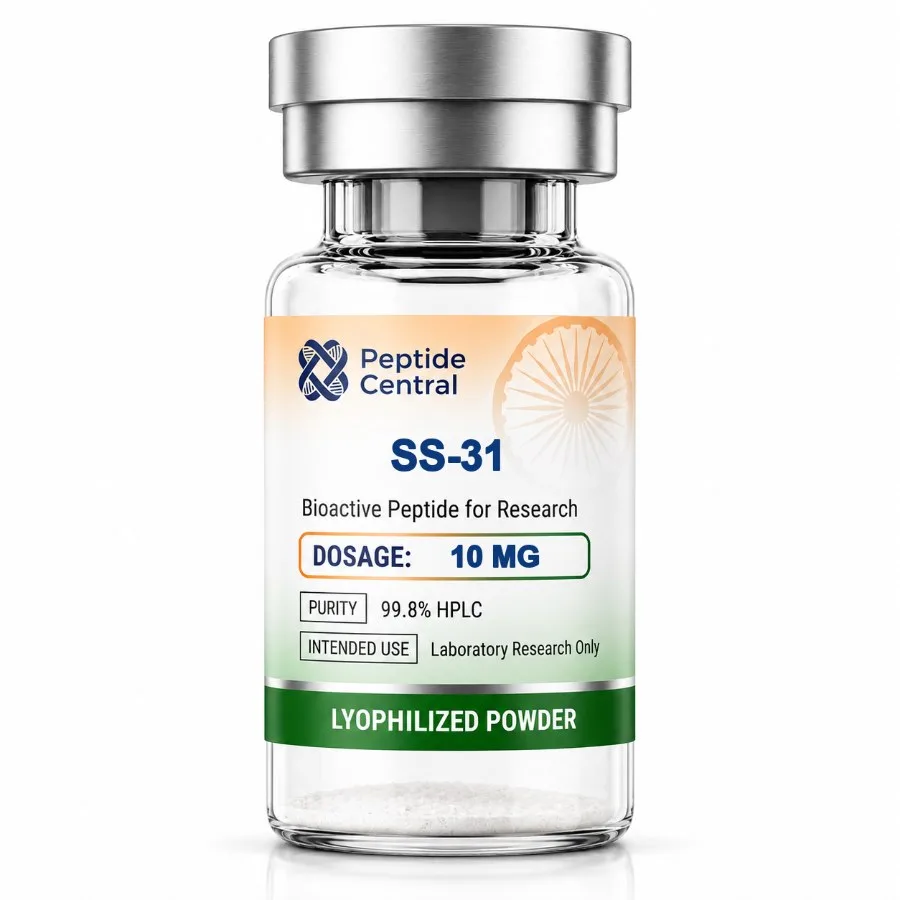
What is SS-31?
SS-31 (Elamipretide, Szeto-Schiller peptide 31) is a tetrapeptide (D-Arg-Dmt-Lys-Phe-NH2) developed by Hazel Szeto and Peter Schiller that selectively targets the inner mitochondrial membrane. It binds specifically to cardiolipin — a phospholipid unique to the inner mitochondrial membrane — where it protects the electron transport chain, reduces reactive oxygen species (ROS) production, and improves ATP synthesis. SS-31 is studied as one of the most targeted mitochondrial therapeutic agents available.
Research Benefits
- Selectively targets and concentrates in the inner mitochondrial membrane via cardiolipin binding
- Protects electron transport chain complexes I and IV from oxidative damage
- Reduces mitochondrial ROS production and reverses oxidative stress
- Restores mitochondrial membrane potential and improves ATP synthesis efficiency
- Studied for cardiac protection — improves mitochondrial function in heart failure models
- Researched for age-related mitochondrial decline, kidney protection, and neurodegeneration
Dosage & Protocol
Research protocols typically use 1–3 mg per day via subcutaneous injection. The ~4-hour half-life supports once or twice-daily administration. Some cardiac and renal protection studies use intravenous administration at higher doses. Standard research cycles are 4–8 weeks, with effects on mitochondrial bioenergetics measurable within 2 weeks.
Frequently Asked Questions
SS-31 contains alternating aromatic and cationic amino acids that cause it to selectively concentrate in the inner mitochondrial membrane by binding to cardiolipin, a phospholipid found exclusively in this location. This targeted accumulation (1000x higher than cytoplasm) allows direct mitochondrial membrane protection.
SS-31 has the strongest research backing in heart failure (FDA Breakthrough Therapy designation in clinical trials), acute kidney injury, and age-related mitochondrial decline. It is also studied for neurodegenerative conditions, skeletal muscle dysfunction, and ischemia-reperfusion injury.
Yes. SS-31 pairs well with Epitalon (telomere/pineal longevity) and MOTS-C (AMPK/metabolic longevity) for a comprehensive mitochondrial and cellular aging protocol. These three compounds address distinct but complementary longevity mechanisms.