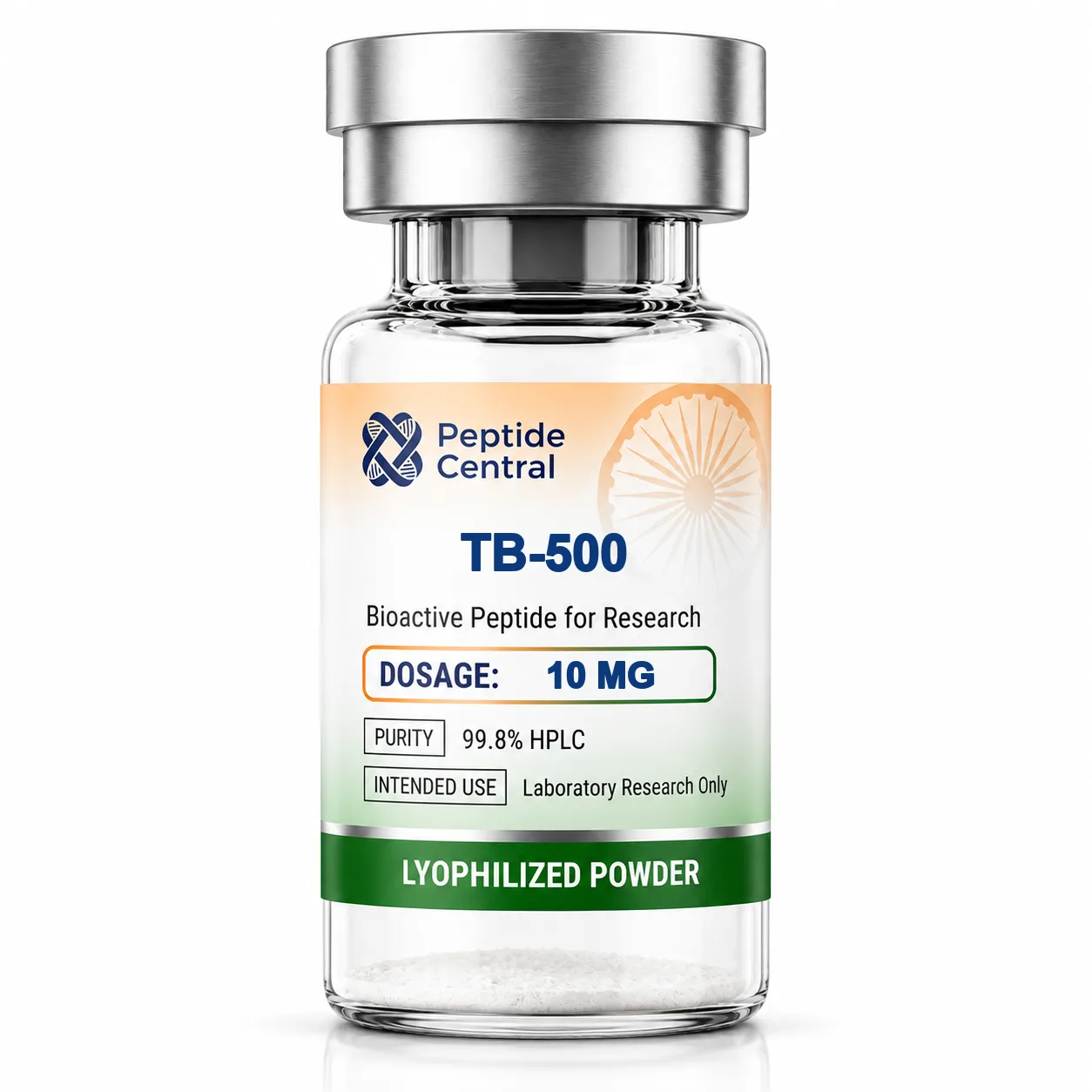
What is TB-500?
TB-500 is a synthetic peptide fragment of Thymosin Beta-4, a naturally occurring 43-amino-acid protein found in virtually all human and animal cells. Specifically, TB-500 corresponds to the actin-binding domain (amino acids 17–23) of Thymosin Beta-4 and is responsible for most of its healing and regenerative activity. It is one of the most potent systemic recovery peptides studied to date.
Research Benefits
- Dramatically accelerates muscle fiber repair and reduces delayed-onset muscle soreness (DOMS)
- Promotes systemic angiogenesis — formation of new blood vessels to heal damaged tissue
- Upregulates actin — the cellular building block critical for cell migration and tissue repair
- Stimulates keratinocyte and endothelial cell migration for skin and wound healing
- Reduces scar tissue formation through modulation of fibrin deposition
- Has been researched for cardiac repair, particularly after myocardial injury
Dosage & Protocol
Research protocols typically use 2–2.5 mg administered subcutaneously twice per week during the loading phase (4–6 weeks), followed by a maintenance phase of 2 mg once per week. The ~24h half-life supports twice-weekly dosing. Common cycle length is 6–12 weeks depending on the research objective.
Frequently Asked Questions
Thymosin Beta-4 is the full 43-amino-acid protein. TB-500 is a synthetic fragment corresponding to the active actin-binding domain (aa 17–23). TB-500 retains most of the healing activity of the full protein and is significantly easier and more affordable to produce.
Most animal studies show measurable tissue repair within 2–4 weeks of consistent twice-weekly dosing. Systemic recovery effects like improved endurance and reduced inflammation are typically observed within the first 2 weeks.
Yes — TB-500 + BPC-157 is the most studied recovery peptide stack. TB-500 provides systemic healing and angiogenesis while BPC-157 drives targeted local tissue repair. Together they cover the full spectrum of musculoskeletal and soft tissue recovery.