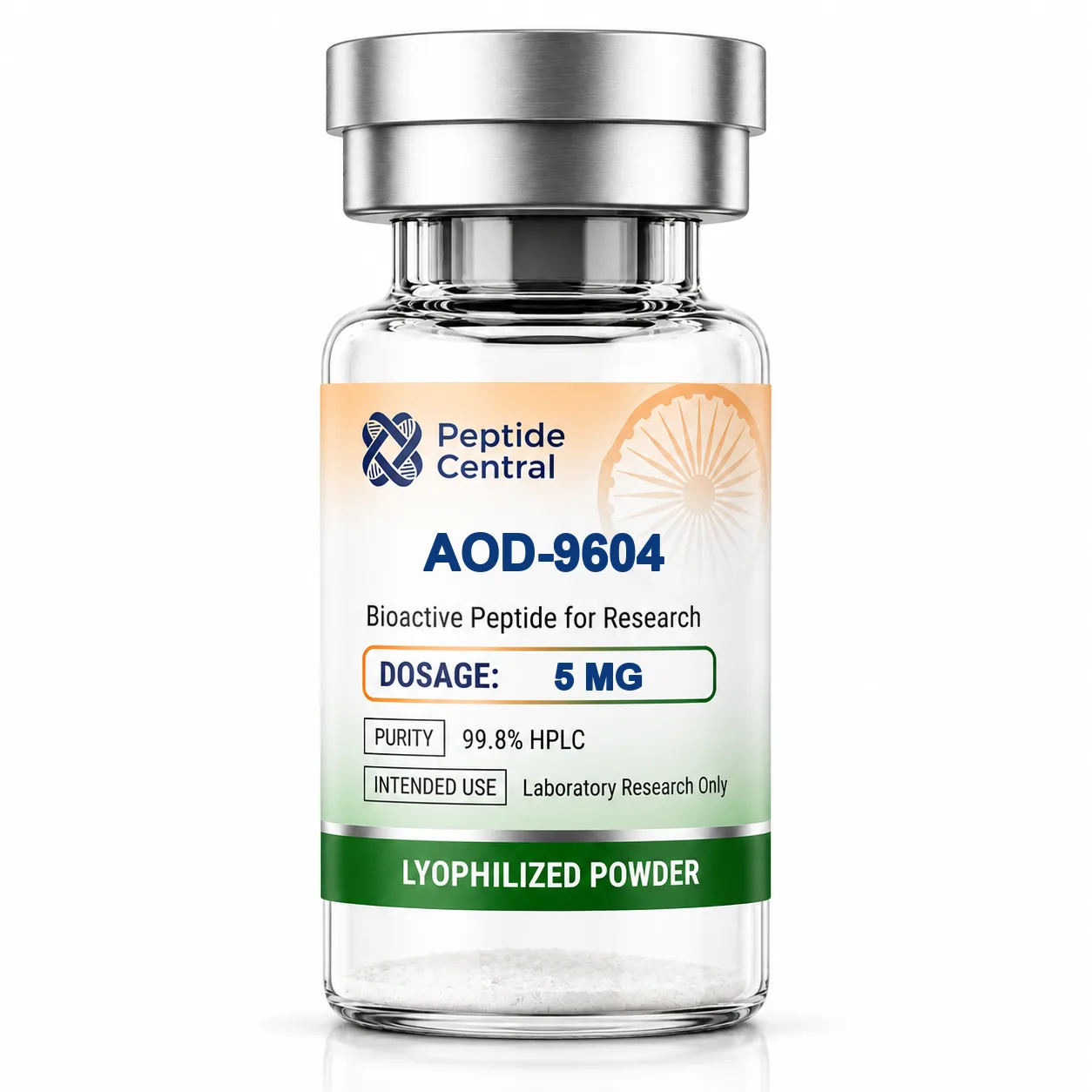
What is AOD-9604?
AOD-9604 (Anti-Obesity Drug 9604) is a modified fragment of human growth hormone (hGH) comprising the C-terminal amino acids 177–191. This fragment retains the fat-metabolizing activity of full hGH without the anabolic, insulin-desensitizing, or proliferative effects of the complete growth hormone molecule. It specifically targets adipose tissue lipolysis via beta-3 adrenergic receptor pathways and has been studied extensively in both animal and human clinical trials.
Research Benefits
- Activates lipolysis in adipose tissue through beta-3 adrenergic pathways
- Inhibits lipogenesis — blocks new fat storage without anabolic side effects of full hGH
- Does not raise IGF-1 levels or affect glucose metabolism at research doses
- Studied in phase 2 clinical trials for obesity management with favorable safety profile
- Selective fat-burning mechanism makes it suitable for body composition research
- Short half-life (~30 min) allows flexible micro-dosing protocols
Dosage & Protocol
Standard research protocol is 300 mcg per day administered subcutaneously, preferably in the morning in a fasted state to maximize lipolytic activity. The short half-life of approximately 30 minutes necessitates daily administration. Some protocols use split dosing of 150 mcg twice daily. Cycles of 12–16 weeks are commonly studied.
Frequently Asked Questions
No. AOD-9604 is the fragment of hGH responsible only for lipolytic activity. Unlike full growth hormone, it does not stimulate IGF-1 production, does not cause insulin resistance, and does not promote tissue growth. This selective activity is its primary research advantage.
Research protocols typically administer AOD-9604 in the morning in a fasted state, as lipolytic activity is enhanced in low-insulin conditions. Administering 30–60 minutes before exercise is also commonly studied to maximize fat mobilization during activity.
Yes. AOD-9604 pairs well with GLP-1 agonists like tirzepatide (appetite suppression + lipolysis) and with MOTS-C (AMPK activation + lipolysis). The complementary mechanisms produce additive fat loss effects in research models.