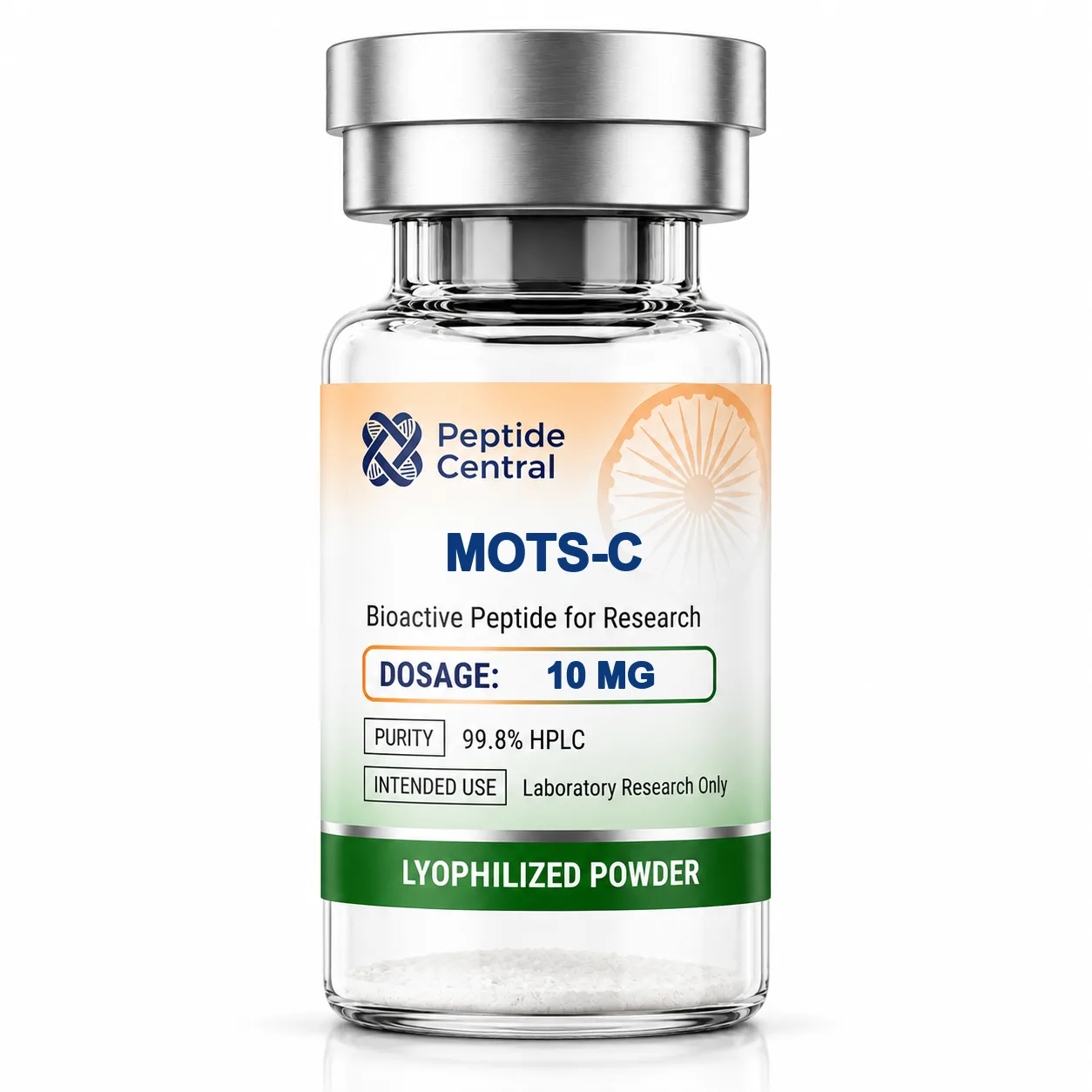

What is MOTS-C?
MOTS-C (Mitochondrial Open Reading Frame of the 12S rRNA-c) is a mitochondria-derived peptide encoded in mitochondrial DNA. Discovered in 2015, it acts as a mitochondrial hormone — or "mitokine" — that regulates metabolic homeostasis, enhances insulin sensitivity, and activates AMPK pathways. It is unique in that it is the first peptide discovered to originate from mitochondrial DNA rather than nuclear DNA.
Research Benefits
- Activates AMPK (AMP-activated protein kinase) to promote fat oxidation and metabolic flexibility
- Enhances insulin sensitivity and glucose uptake in skeletal muscle cells
- Regulates one-carbon metabolism and folate cycle for nucleotide synthesis
- Researched for longevity via mitohormesis — protective stress response in mitochondria
- Reduces diet-induced obesity and insulin resistance in animal studies
- Translocates to the nucleus under metabolic stress to regulate gene expression
Dosage & Protocol
Research protocols commonly use 5–10 mg administered subcutaneously 3 times per week. Some protocols use daily administration at lower doses. The approximate 24-hour half-life supports flexible scheduling. Cycle length in research settings is typically 4–8 weeks.
Frequently Asked Questions
MOTS-C is the only peptide derived from mitochondrial DNA. Its mechanism — AMPK activation and mitohormesis — addresses metabolic health at the cellular energy level, making it distinct from appetite-suppressing GLP-1 agonists like semaglutide.
Yes. MOTS-C is commonly researched alongside other metabolic peptides. Its AMPK-activating mechanism is complementary to AOD-9604's lipolytic activity, and some protocols combine it with GLP-1 agonists for synergistic metabolic effects.
Research protocols most commonly use 5–10 mg subcutaneously 3 times per week (e.g., Monday/Wednesday/Friday). The ~24h half-life means daily dosing at 5 mg is also studied, though 3x/week is more practical for most protocols.