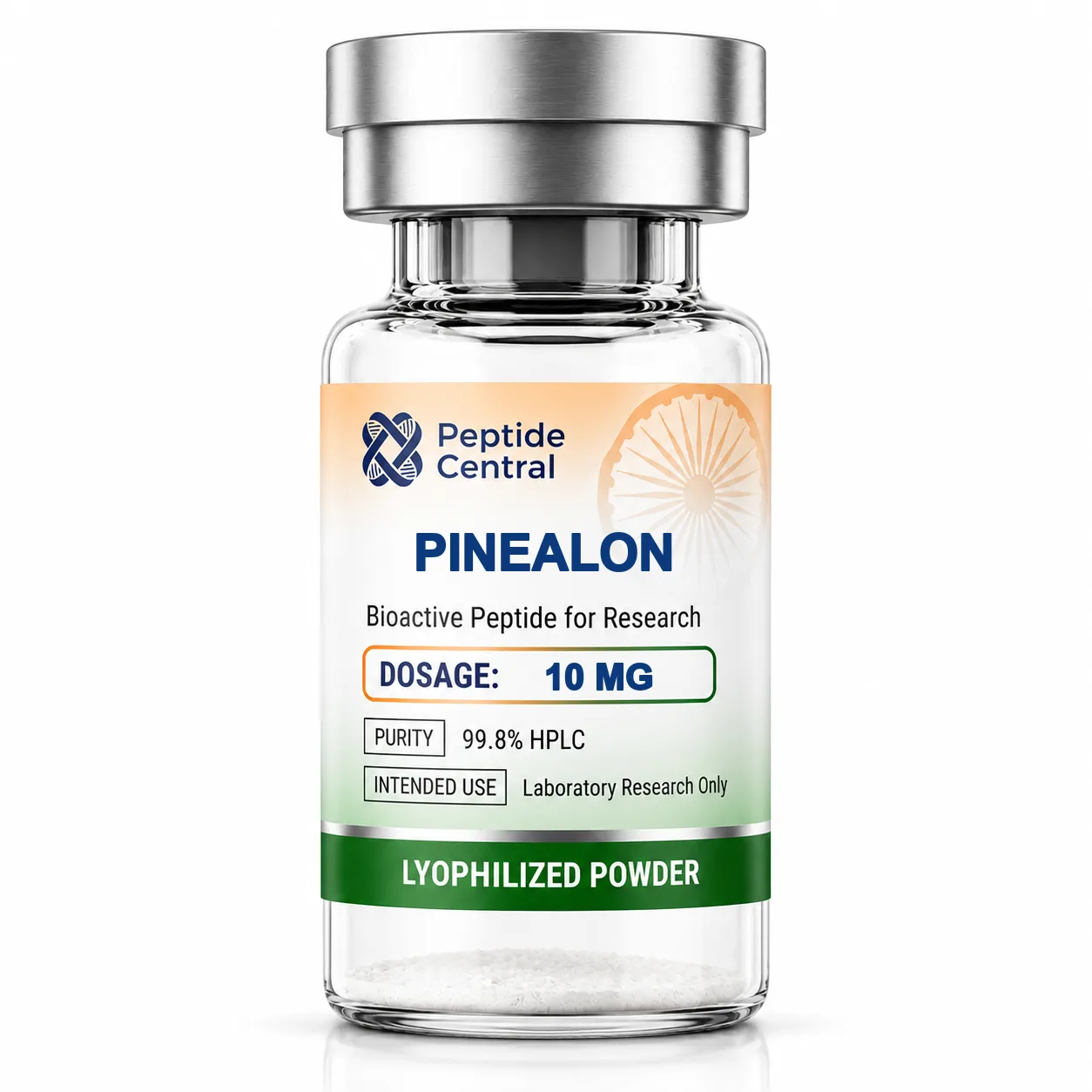
What is Pinealon?
Pinealon is a synthetic tripeptide (Glu-Asp-Arg) derived from the pineal gland, developed by the St. Petersburg Institute of Bioregulation and Gerontology. It belongs to the family of short peptide bioregulators researched by Vladimir Khavinson. Pinealon is studied for its neuroprotective, circadian-regulating, and cognitive-enhancing properties, with particular interest in its role in melatonin biosynthesis pathway regulation and pinealocyte protection.
Research Benefits
- Neuroprotective effects through antioxidant activity and mitochondrial membrane protection
- Researched for circadian rhythm regulation and improved sleep quality via pineal function
- Supports melatonin biosynthesis pathway — relevant for sleep, aging, and immune function
- Cognitive enhancement — studied for improved memory consolidation and learning in aged models
- Demonstrates anti-aging properties via gene expression regulation in brain cells
- Synergistic with Epitalon for comprehensive longevity and pineal gland support protocols
Dosage & Protocol
Research protocols use 5–10 mg per day administered subcutaneously. The ~24-hour half-life supports once-daily dosing, preferably in the evening to align with pineal gland activity. Standard research cycles from the Khavinson Institute protocols are 10–20 days, repeated 2–3 times per year.
Frequently Asked Questions
Pinealon is a synthetic tripeptide (Glu-Asp-Arg) derived from the pineal gland. It was developed by Professor Khavinson at the St. Petersburg Institute of Bioregulation and Gerontology as part of a broader peptide bioregulator research program targeting organ-specific rejuvenation.
Pinealon is researched for supporting the melatonin biosynthesis pathway and protecting pinealocytes — the pineal gland cells responsible for melatonin production. Improved pineal function correlates with better melatonin regulation and improved sleep architecture in research models.
Yes. Pinealon and Epitalon are complementary in longevity and brain health protocols. Epitalon activates telomerase and restores melatonin production, while Pinealon protects pineal gland cells and supports the melatonin biosynthesis pathway — making them a synergistic combination.