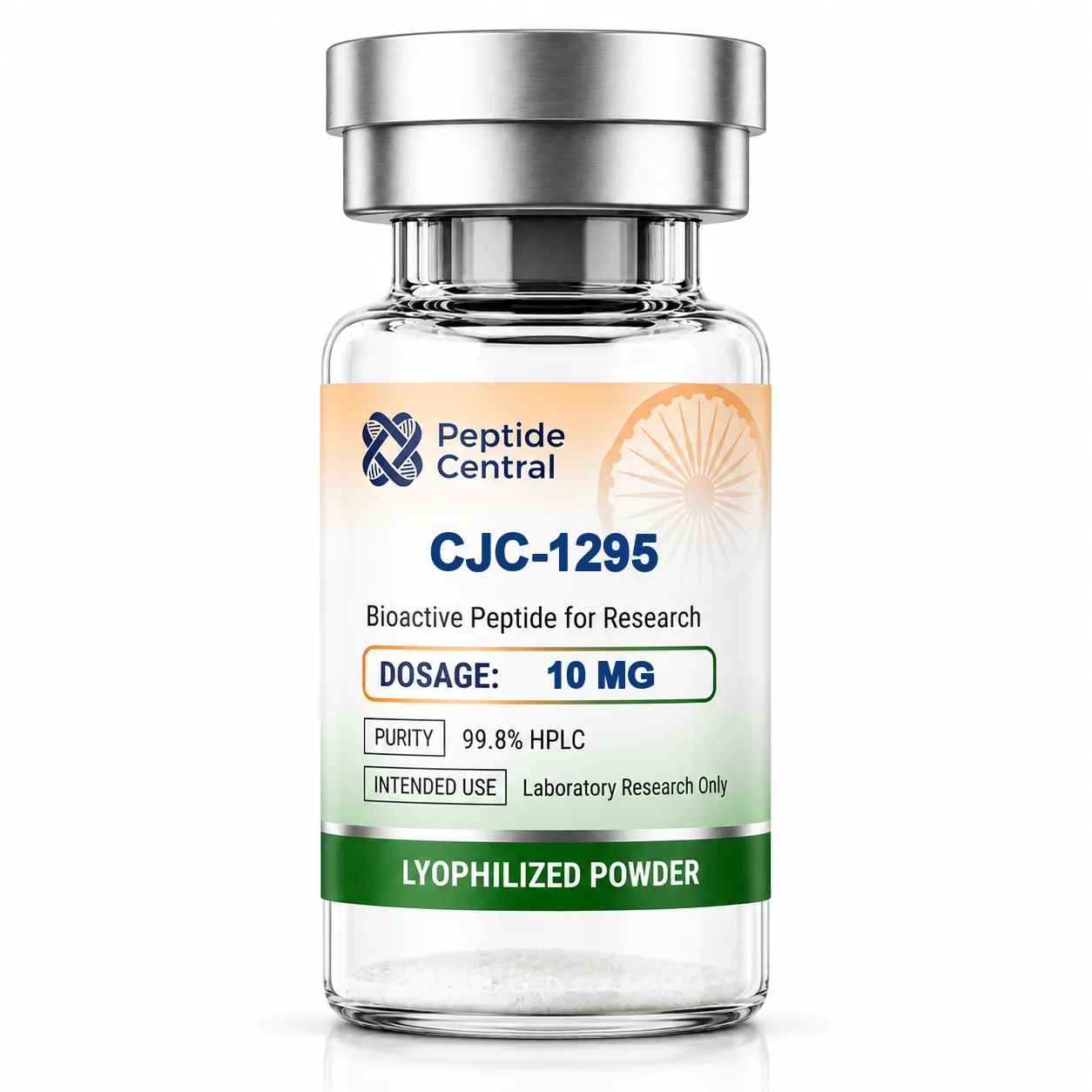
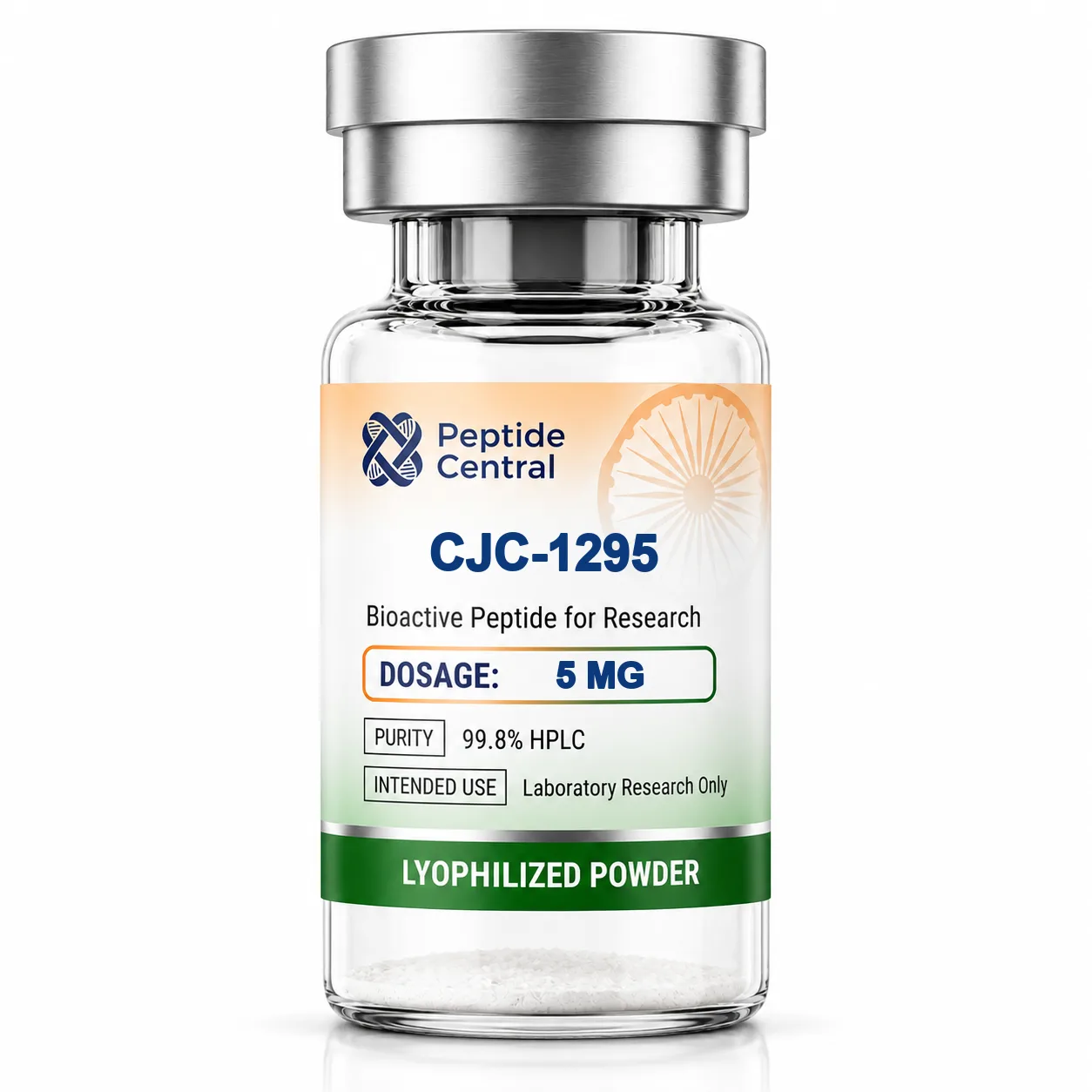
What is CJC-1295 (no-DAC)?
CJC-1295 (no-DAC) is a synthetic tetrasubstituted peptide analogue of Growth Hormone Releasing Hormone (GHRH), comprising the first 29 amino acids of GHRH with four amino acid substitutions to enhance metabolic stability. Unlike CJC-1295 with DAC (Drug Affinity Complex), the no-DAC version has a short half-life that produces discrete, pulsatile GH secretion — mirroring the natural GH pulse pattern. This pulsatile release is considered more physiological than the sustained elevation produced by the DAC version.
Research Benefits
- Amplifies natural GH pulses in a pulsatile pattern that mirrors endogenous GH secretion
- Increases IGF-1 levels, supporting muscle protein synthesis and fat mobilization
- Supports body recomposition — simultaneous fat loss and lean mass preservation
- Enhances deep sleep quality through GH-mediated slow-wave sleep promotion
- Improves skin thickness, joint health, and connective tissue integrity
- Synergistic with Ipamorelin — combined use produces markedly amplified GH pulses
Dosage & Protocol
Research protocols typically use 1–2 mg per week via subcutaneous injection. To produce pulsatile GH release, doses are split: 100–200 mcg per injection, administered 2–3 times daily (particularly around sleep and exercise). The ~30-minute half-life supports this split-dose approach. Cycles of 8–12 weeks are commonly studied.
Frequently Asked Questions
CJC-1295 with DAC binds to albumin, extending half-life to 6–8 days and producing a sustained GH "bleed." No-DAC has a ~30-minute half-life, producing discrete GH pulses similar to the body's natural secretion pattern. Most researchers prefer no-DAC for its more physiological GH release.
CJC-1295 (no-DAC) stimulates GH release via GHRH receptors, while Ipamorelin acts on ghrelin receptors — two different pathways. When combined, they produce a synergistic GH pulse that is significantly larger than either compound alone, making this one of the most studied GH-stimulating combinations.
Initial IGF-1 increases are typically measurable within 1–2 weeks of consistent use. Body composition changes — improved sleep quality, increased muscle fullness, and reduced body fat — are generally noticeable within 4–6 weeks in research settings.